Language Selection


The hermitage of Saalfelden - a recreational place with a long history
The image of the hermitage—a small chapel carved into the rock, nestled in the landscape just above Saalfelden—is truly memorable. It is deservedly a hugely popular hiking destination for young and old alike, and rightly cherished as a place of special energy and spiritual power. Even today, a hermit lives on the "Palfen"—as we locals in Saalfelden affectionately call the site—during the summer months. But what is the story behind this place of power? Who are the people who spend their summers up there, living in solitude and asceticism? And why do they do it?
Seeking solitude. Finding ..?
Finding harmony with God and nature is a motivation for seeking out solitude. The hermitage on the Saalfelden Palfen is one of the last of its kind. A hermit still inhabits the dwelling today. Literally, the word "hermit" means "dweller of the desert." During the early centuries of Christianity, hundreds of men and women left civilization behind and ventured into the Egyptian desert. There, they embarked on a radical quest for God. A hermit views himself as a follower of Jesus Christ and seeks refuge in solitude—in a sense, as a protest against worldliness. The first hermit moved into the Saalfelden hermitage in 1664.


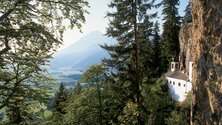
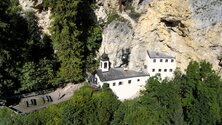
The first hermit in the hermitage of Saalfelden
Since the 16th century, people have made pilgrimages to the rock cave at the Palfen, which is adorned with an image of Saint George. Later, a chapel was built, and a hermitage was erected on the rock face below it. Thomas Pichler, a farmer's son who had joined the Franciscan Order, was the first to move into the dwelling. At that time, the hermits—known as *Klausner*—were tasked, among other things, with keeping a fire watch during the night. From their vantage point, they had a clear view of the surrounding area, and as soon as they spotted a fire, they would ring the bell. Brother Thomas lived in the hermitage for 35 years.
Until 1900 thirteen hermits lived at the hermitage
By the end of the 19th century, thirteen more hermits had followed, some of whom spent up to forty years at the Palfen. An ascetic lifestyle characterized by poverty and humility, the avoidance of distractions and worldly stimuli, and communion with God are all part of a hermit’s spiritual path. Prayer, meditation, and penance are further practices used to find inner stillness and peace. Although not every hermit was strictly devout, the tradition in Saalfelden has never lapsed and remains deeply rooted in the community to this day.
The decades in the 20th century were unforgettable
Josef Haitzmann and Friedl Schobersteiner were the hermits who shaped this gem situated above the Bürgerau district during the 20th century. Afterward, it seemed as though the hermitage’s days were over. Admittedly, several guardians of the sanctuary had endeavored to preserve this place of quiet contemplation; Franz Wienerroither, for instance, began researching the history of the hermitage and restoring the hermits' dwelling in the 1990s.


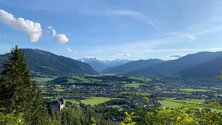

The last years and an international appeal to the public
However, it was not until the arrival of retired master tailor Karl Schantl that a permanent resident returned to Saalfelden to revive the hermit lifestyle as a spiritual experience. He was followed by Brother Raimund von der Thannen, who spent no fewer than 11 summers at the Palfen. In 2016, Thomas Fieglmüller—a priest from the Archdiocese of Vienna and a psychotherapist—served as the hermit at the Palfen; the position was subsequently advertised again in the autumn of 2016, attracting international interest. Applications arrived from Argentina, Canada, Australia, and Thailand, and in April 2017, a Fleming (Belgian national) named Stan Vanuytrecht finally moved into the hermitage. Having long been stationed in Germany as an officer, he speaks fluent German. His professional background includes work as a surveying technician, deacon, and paramedic, as well as experience in the care of prison inmates, the homeless, drug addicts, and psychiatric patients. He spent his third summer at the Saalfelden Palfen in 2019.
Anyone wishing to meet our hermit would do best to avoid Tuesdays, Fridays, and Sundays, as those are the days he is out in town or attending church services.
The history of the hermitage and the hermits:
- 16th century: First people make a pilgrimage to the hermitage of Saalfelden
- 1664: The first hermit moves into the hermitage (Thomas Pichler)
- 1699-1900: 13 hermits look for harmonie and peace at the hermitage
- 20th century: Josef Haitzmann and Friedl Schobersteiner
- 1968: Hermitage opens for visitors
- 1990: Franz Wienerroither restores the hermitage
- 2001-2003: Karl Schantl
- 2004-2016: Bruder Raimund von Thannen from the monastery St. Lambrecht
- 2016: Thomas Fieglmüller; international search for a new hermit
- Since 2017: Stan Vanuytrecht
Pictures: Foto Bauer, Foto Lebesmühlbacher, Saalfelden Leogang Touristik