The Hüttschmiede blacksmith's
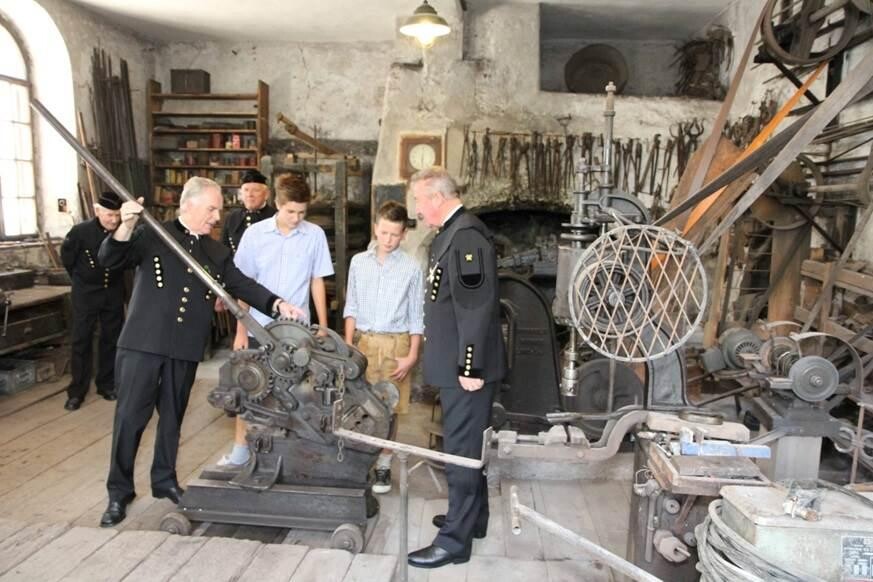
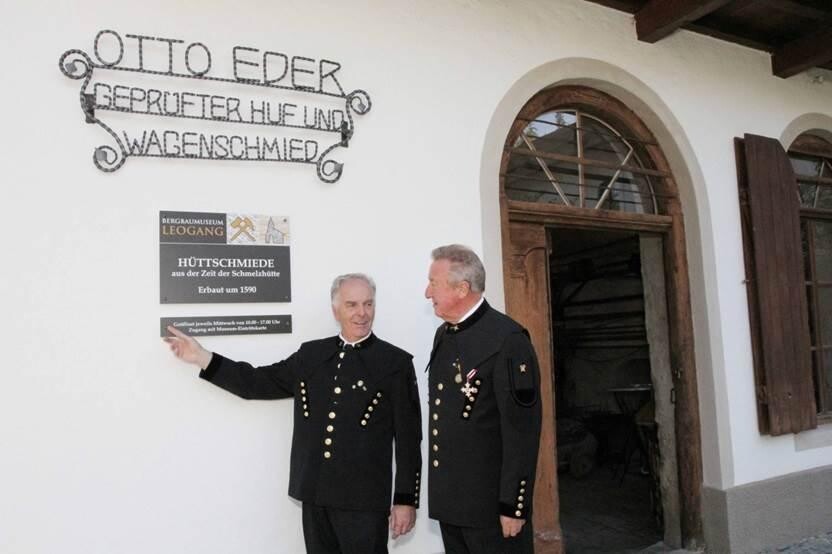
In the Hüttschmiede in the Leogang district of Hütten, traditional blacksmithing is demonstrated. The workshop belongs to a smelting furnace from the 16th century and was in commercial operation until 1972. At the historical forge, at the anvil, and at the heavy spring hammer, one can see how glowing iron is worked.
The forge in Leogang was closely connected to mining in the Schwarzleotal valley. The agriculture and forestry in the valley, as well as the "small iron road" between Pinzgau and Tyrol, provided numerous orders. The workshop combined the work of farriery, tools, and wagon smithing. Accordingly, the demands on working the glowing iron were quite diverse.
For centuries, the water of the Leoganger Ache drove the machines. Several waterwheels supplied the necessary power. In the 20th century, the switch was made to one waterwheel with a transmission for power transfer. Finally, in the 1950s, electric energy made its entrance. The forge remained commercially operational until 1972 and was then used occasionally for smaller repairs.
The forge with its gothic arch dates back to the founding period. In its fire, the iron was heated until it could be shaped. The processing was done by hand on the anvil or with the heavy power hammer. A drill and a natural grinding stone complemented the equipment. Since 2012, the demonstration operation has made traditional craftsmanship accessible again and showcases the working steps on glowing iron.